
Where should a porta potty go on a job site or event lot?
Pick flat ground first. A standard unit runs about 44 by 48 inches on the ground and stands close to 92 inches tall, so give it a footprint clear of low branches and roof overhangs. Set it away from storm drains and slopes that pool water. If you're renting for a build, pair placement with your construction site services plan so the unit sits near the crew, not the street. For events, walk the lot first; our event restroom rental crews look for the same flat, stable ground ADA Standards section 302.1 calls for, since surfaces have to be firm and slip resistant for anyone using an ADA accessible porta potty. Keep a 36 inch clear path per ADA Standards section 403.5.1 to any accessible unit, and a 60 inch turning circle per ADA Standards section 304.3.1 if the site allows a cluster. If you're placing multiple units, ADA Standards section 213.2 requires at least 5 percent of a cluster, and never fewer than one, to be accessible. Check our porta potty placement guide partner page, the ADA restroom requirements page, for the door and reach specs.
Do I need a permit to place a porta potty or dumpster in Fountain Valley?
Placement in the public right of way, on a sidewalk, or in a street parking lane needs confirming with the city before you set anything down. We are not naming a specific ordinance here because permit rules and fees vary and were not verified for this page; check with Fountain Valley before delivery day. This applies just as much to a roll-off dumpster rental as it does to a toilet. A dumpster placement permit and its cost differ by lot, driveway, or curb placement, so read our dumpster permit requirements page before you commit to a spot. The same caution applies to a temporary fence rental that crosses a property line. If your project sits close to Midway City, 4.3 miles northwest, or Stanton, 8.2 miles north, permit desks may differ, so confirm locally rather than assume Fountain Valley rules travel with you.
How much clearance does delivery need?
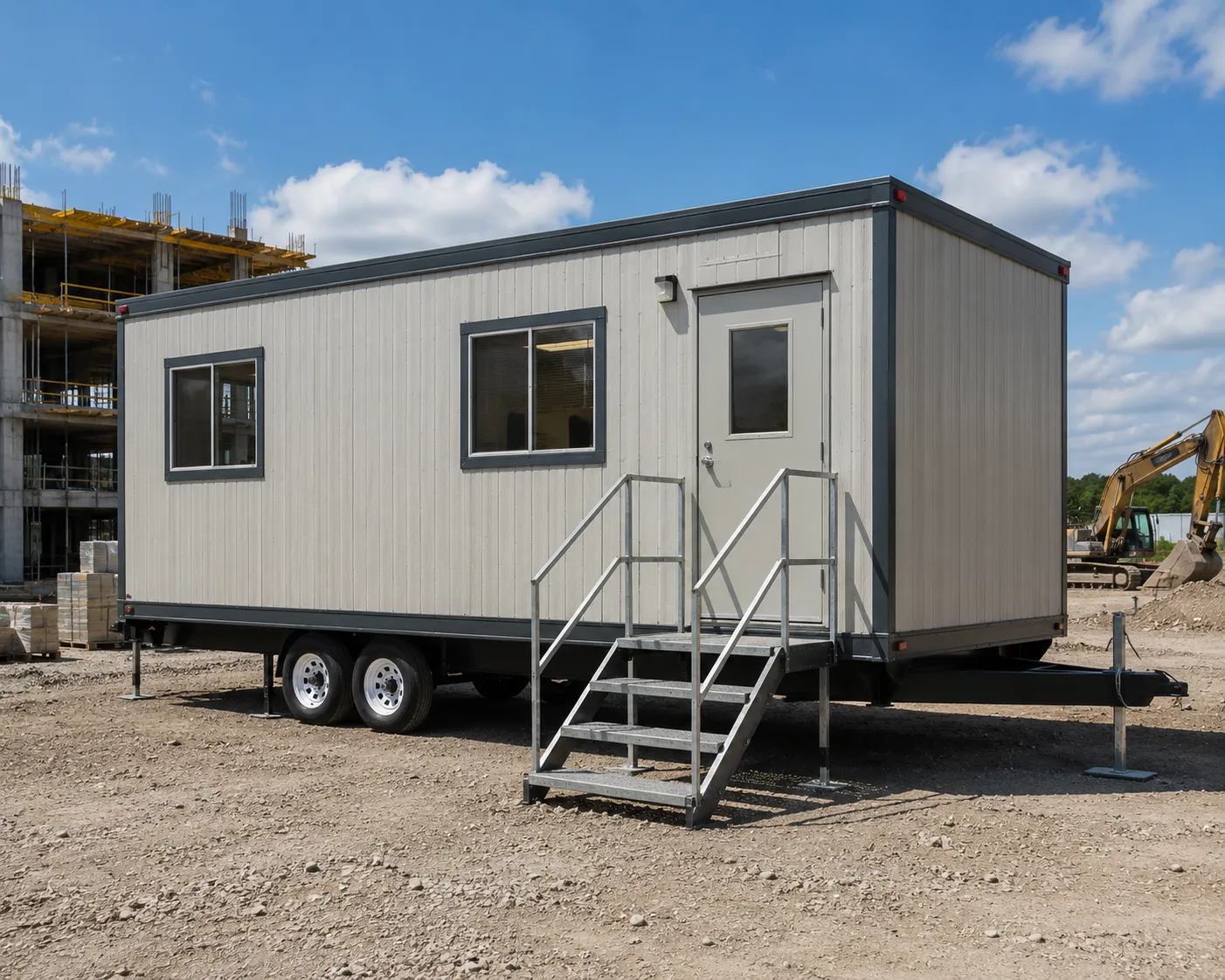
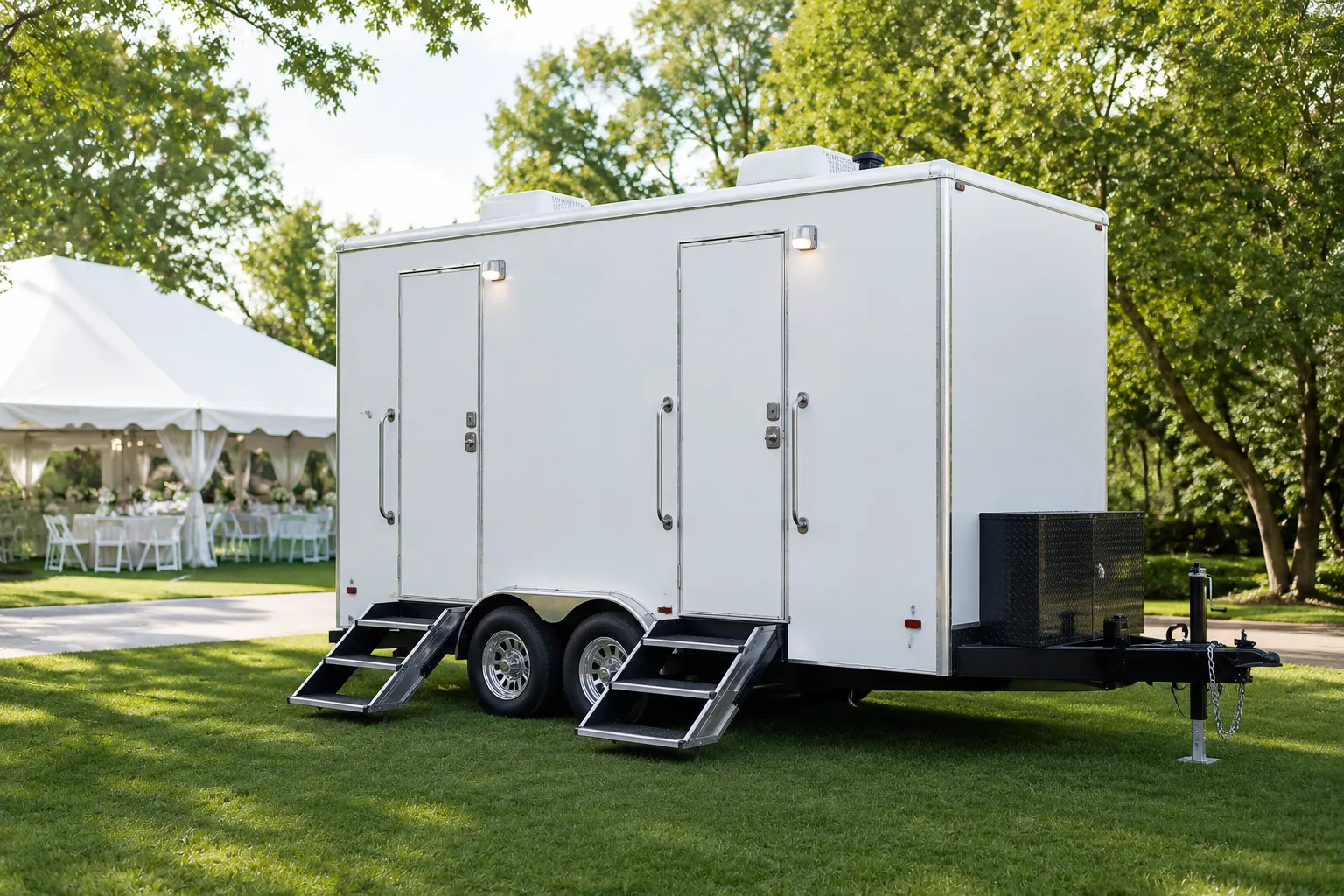
A roll-off truck needs about 60 feet of straight clearance behind it to set a dumpster down safely, so measure your driveway or lot entrance before booking a 10 yard dumpster rental or larger. Porta potty delivery trucks need less room, but a straight backing lane still helps, especially for a restroom trailer rental or an 8 stall restroom trailer, which are longer and lower to the ground than a standard unit. If you're adding a handwashing station rental nearby, note that 29 CFR 1910.141(d)(2) requires soap and towels or a hand-drying device at any washing facility; hand sanitizer alone does not satisfy that rule. Some crews ask about Ozark River portable sink replacement parts for older units in their fleet; if a sink on-site needs a part swap rather than a full portable sink rental, plan that repair before delivery day, not after. Same logic applies to a mobile office trailer rental: a damaged or non-latching door needs a mobile office trailer replacement door sourced ahead of drop-off, not scrambled for once the trailer is on site.
How many units do I need for the crew size and layout?
OSHA 1926.51(c)(1) sets the baseline for construction sites: 1 toilet for 20 workers or fewer, then 1 toilet and 1 urinal per 40 workers up to 200, and 1 per 50 above that. Farm crews fall under a different rule, OSHA 1928.110, which calls for one facility per 20 hand-labor employees within a quarter mile walk, worth knowing if you're setting up farm and agricultural restrooms. Service frequency matters too. ANSI/PSAI Z4.3 sets a baseline of one service visit per week for up to 10 users over a 40 hour week, so a bigger crew or event needs a tighter service schedule, not just more units. For crews using paints, coatings, herbicides or insecticides, OSHA 1926.51(f)(1) requires washing facilities separate from general toilets. Run the numbers with our how many porta potties do I need tool before you finalize layout, and compare weekly and monthly pricing on the monthly porta potty rental page.
| unit | day | week | month |
|---|---|---|---|
| standard | 150 | 200 | 200 |
| ada | 230 | 185 | -- |
| deluxe | 300 | 250 | -- |
Septic and grease needs follow their own placement logic. A grease interceptor gets pumped once fats, oils, grease and solids reach 25 percent of liquid depth, so keep access clear for the truck, same as you would for a residential tank pumped every 3 to 5 years. If a job takes you toward Placerville for septic pumping service on a satellite property, that's outside our Fountain Valley service radius, but our septic pumping service and grease trap pumping pages cover placement and access needs that transfer anywhere.
How far from the work area should a porta potty sit?
Close enough that workers use it, far enough it doesn't block equipment or deliveries. OSHA's field sanitation rule for agriculture sets a quarter mile walk limit; general construction sites don't set a distance but common sense and ANSI/PSAI Z4.3 service access both favor short walks and clear truck lanes.
Can I place a porta potty on the street in Fountain Valley?
Street and right-of-way placement needs city confirmation first. Rules and fees were not verified for this page, so call before delivery. Curbside placement often needs cones or barricades meeting OSHA 1926.202 standards if workers are nearby.
What ground surface works best under a unit?
Flat, firm, and slip resistant, matching ADA Standards section 302.1. Gravel, pavement, and compacted dirt all work. Soft grass after rain does not; wheels sink and the unit can tip.
Do I need an accessible unit at every event?
Not every event, but clusters need at least one. ADA Standards section 213.2 requires 5 percent of a cluster, minimum one unit, to be accessible, with a 32 inch door per ADA Standards section 404.2.3.
How do I plan handwashing station placement?
Put it beside the toilet cluster, on the same firm ground, within reach of foot traffic. 29 CFR 1910.141(d)(2) requires soap and towels, not sanitizer alone, so check your hand sanitizer station rental order against your handwashing requirements checklist first.
Next step
Get a delivery date
Tell us the address, the dates and the headcount. We size the order and confirm the route.