
How many restrooms does a county fair need?
Start with attendance, not gate count, since fairs run all-day traffic in waves. OSHA's construction sanitation rule, 1926.51(c)(1), sets 1 toilet per 20 workers on a job site, but a fair crowd behaves differently and needs a denser ratio because people cluster near food and stages. Most fair organizers we work with in Fountain Valley plan around one unit per 40 to 60 guests for a single day, then add units for multi-day events where cleaning windows get tighter. A standard portable toilet uses a 60 to 70 gallon holding tank, which matters when you are running a two-day fair with heavy midday traffic and only one evening service window. Fairs with beer gardens or wine pours should figure higher usage per unit, since bar traffic clusters restroom demand into short bursts instead of spreading it evenly.
For midway sections and family zones, we usually recommend spacing deluxe flushable units near the entrance and standard units further back near vendor rows, so lines do not choke walkways. Every cluster needs at least one accessible unit per ADA Standards section 213.2, and the approach path to it should hold a 36 inch clear width per ADA Standards section 403.5.1. If your fairgrounds site sits within a quarter mile of vendor food booths handling raw ingredients, add a handwashing station near each booth cluster; 29 CFR 1910.141(d)(2) requires soap and towels or a hand-drying device at washing facilities, and hand sanitizer alone does not meet that standard. Our full breakdown on how many porta potties you need walks through the math for different attendance tiers.
What restroom setup works best for a multi-day fair?
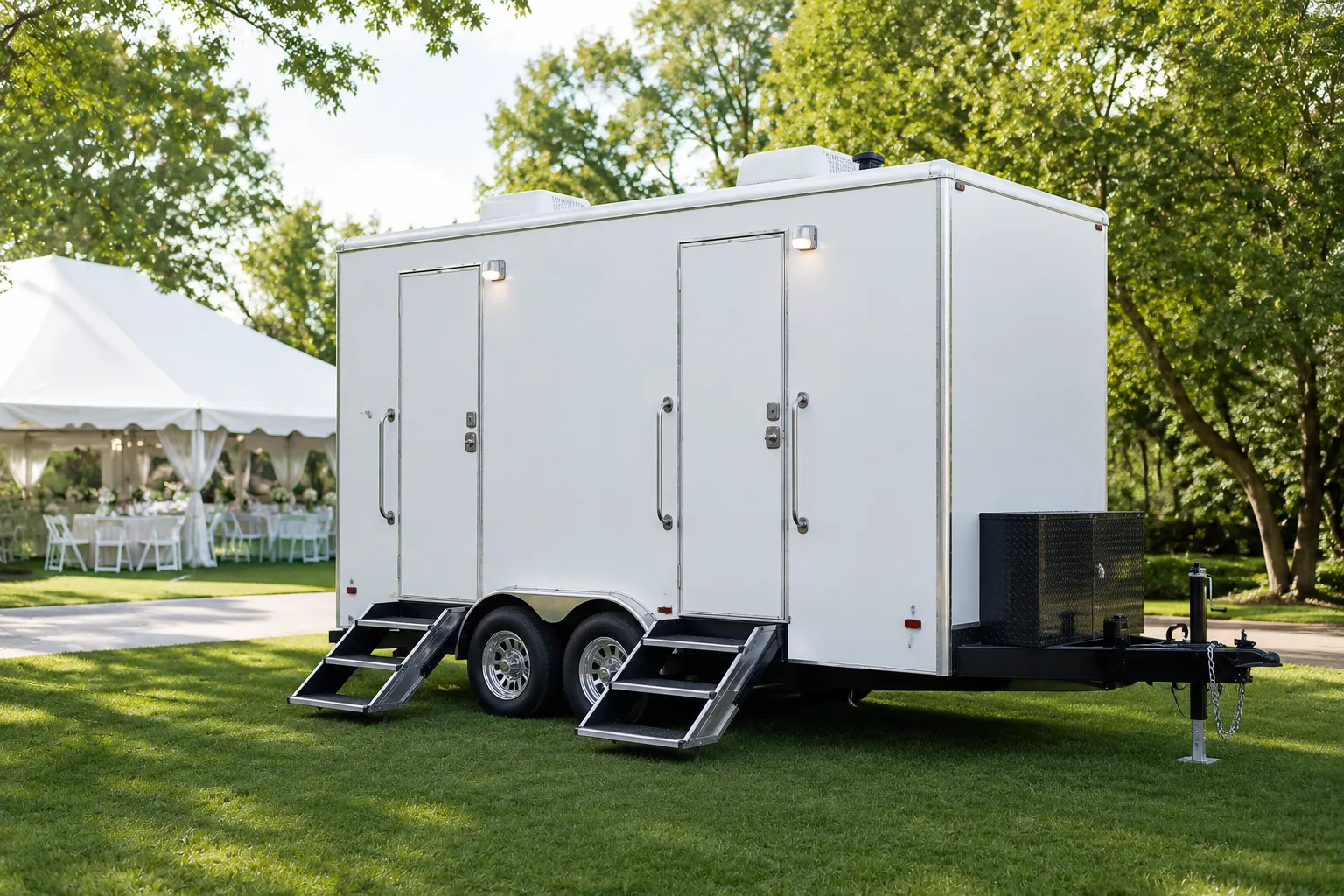
A blended setup: a bank of standard units, one or two ADA accessible units, a 4 stall restroom trailer near the main stage, and handwashing stations at every food row. The trailer adds real sinks and better light for evening hours, which matters once the sun goes down and midway lighting gets crowded with generator noise and foot traffic. For county fairs pulling several thousand a day, an 8 stall restroom trailer often works better than doubling up on standard units, since it consolidates plumbing and cuts servicing trips.
Temporary fencing matters here too. Vendor rows, animal barns and equipment yards benefit from chain link temporary fencing to keep foot traffic on marked paths, and any barricade used to protect a work crew setting up rides or stages should meet ANSI D6.1 as referenced in OSHA 1926.202. If the fairgrounds host overnight vendor storage, a storage container rental keeps tools and unsold inventory locked down between fair days instead of trucking it out nightly. Roll-off dumpsters placed near food court exits handle the volume; a 20 yard dumpster usually covers a single fair day of food waste and packaging, while a 30 yard dumpster fits multi-day runs better. Fountain Valley fair organizers should also check dumpster permit requirements before placement, since curb or right-of-way placement needs confirming with the city and we cannot name a specific ordinance here.
Why does servicing schedule matter for fair restrooms?
Because a fair concentrates thousands of uses into a single weekend, not spread across a normal work week. The baseline service interval under ANSI/PSAI Z4.3 assumes roughly 10 users per unit over a 40 hour week, and a fair blows past that ratio fast. We schedule extra servicing visits between fair days rather than relying on the standard weekly rhythm, topping off handwashing stations and pumping tanks before they hit capacity. Grease-heavy food vendors should also plan for a grease trap pumping if they are running fryers on-site for more than a single day, since interceptors get serviced once fats, oils, grease and solids reach 25 percent of liquid depth. Fountain Valley sits about 4.3 miles from Midway City and 8.2 miles from Stanton, so our trucks can restock and return between fair days without long turnaround gaps. For fairs running lighting rigs into the evening, a light tower rental keeps restroom paths visible once midway lights dim down.
How far in advance should I book restrooms for a fair?
Book as soon as your date and attendance estimate are set, ideally 60 to 90 days out for a county fair. Fair season books up trailers and ADA units first. Waiting until two weeks out limits you to whatever standard units remain in inventory.
Do fairgrounds need ADA accessible units?
Yes. Wherever standard units are clustered, ADA Standards section 213.2 requires at least 5 percent to be accessible, and never fewer than one. Approach paths need a 36 inch clear width and a firm, slip-resistant surface.
What does a restroom trailer cost for a fair weekend?
Trailer pricing varies by size and event length; check our restroom trailer rental cost page for current bands. Multi-day fair bookings typically fall into weekend or event-length pricing rather than a single day rate.
How often are fair restrooms cleaned during the event?
We schedule servicing between fair days rather than a once-a-week visit, since attendance far exceeds the standard 10-user weekly baseline. High-traffic clusters near food courts often get serviced twice daily during peak fair weekends.
Can I rent handwashing stations separately from restrooms?
Yes. Handwashing station rental is priced and booked independently, and food vendors handling raw ingredients need one nearby regardless of restroom count, per 29 CFR 1910.141(d)(2).
Next step
Get a delivery date
Tell us the address, the dates and the headcount. We size the order and confirm the route.